Showing posts with label Other. Show all posts

Thursday, September 30, 2010

Hearing on Marcellus Shale

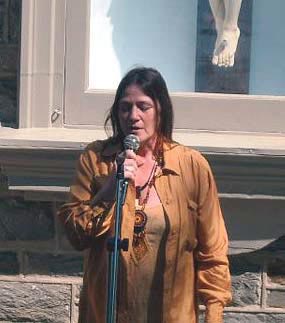
This is a testimonial account from Sister Mary Elizabeth Clark on September 28, 2010 about the drilling for gas in Marcellus Shale.


My name is Sister Mary Elizabeth Clark, a Sister of Saint Joseph of Philadelphia. I am director of the Sisters of Saint Joseph Earth Center in Chestnut Hill. I am also Special Assistant to the President for Sustainability of Chestnut Hill College and a Board Member of Genesis Farm in Blairstown, NJ.


For the past eleven years, our Congregation of Sisters of St. Joseph have had a com- mitment to the issue of Sustainability of our Planet Earth with special attention to the issue of water.


As a result, we have educated and advocated about the respectful treatment of water. The issue of drilling for gas in the Marcellus Shale region of PA has serious moral consequences and thus for this reason is a concern of ours.


I urge you as our immediate representatives in City Council to insist that the ethical standards of purification of our drinking water be enforced on any possible contami- nants from the drilling. There ought to be a moratorium on drilling until it has been shown to be absolutely safe for the Delaware River the source of our drinking water. This is only one of the issues that threaten our Planet caused by the potential drilling. Another issue such as deforestation is also a major concern.


Legislation prior to the actual drilling for gas in the Marcellus Shale region of PA ought to include investigation into the health-related effects of any toxic chemicals or radio active ingredients resulting from the drilling and then entering the Delaware River.


In addition, when researching the components of hydraulic fracturing fluids that may seep into the ground water investigations by the DEP ought not to be funded by any money coming from vested interests in the profit of the drilling. The ethical implica- tions of political gain or profit by individuals must be examined by those creating legis- lation to protect the health of PA watersheds. Every means available for honest investigation ought to be employed by the State legislature. As members of our City Council, you are in a prime position to call for this ethical behavior. 

Saturday, July 31, 2010

Dr. Vandana Shiva Visits


Dr. Vandana Shiva from India visited Philadelphia on July 14 to speak at a program hosted by the Academy of Natural Sciences. Dr. Shiva spoke of the significant changes in agriculture brought on by genetically modified seeds. She encouraged Gardens of Hope and Seed Saving Sanctuaries. Her center in India, called Nav- danya, is a program of the Research Foundation for sci- ence, technology and ecology, a participatory research initiative she founded. In 1984 the violence of the Punjab and the Bhopal tragedy demanded a paradigm shift in the practice of agriculture. Navdanya was born of the search for non-violent farming, which protects biodiver- sity, Earth, and small farmers. Navdanya fights against patents on seeds and plants and stands for seed sover- eignty, people's right to food and water security. 

Wednesday, June 30, 2010

Dedication Ceremony

Here are some photos of the dedication ceremony that took place in June 2012 at the new location at Chestnut Hill College.


Thursday, January 1, 2009

Highlights from the Cecilian Years

2003-2007

"Progress...the lifestyle of the developed world... is not only killing us, it's killing every living species on this planet and harming the planet itself in ways that have never happened before in human history" -Thomas Berry

In the time period of 2003 to 2004, the Cecilian Center for Earth, Arts, and Spirit accomplished much:
  • The Committee hosted a lecture series called At Home in the Universe with Dom Roberti, Ph.D., Susan Curry, and Al Lamberti, Ph.D.
  • The Committee raised $17,300 in grants.
  • Ginny Christiansen organized a Resource Library.
  • The Sustainability Alliance began housing their resource library in the center.
  • Music classes were offered for children, teens, and adults.
  • Through MALT art an composting classes were offered.
  • A survey and interviews were performed with community organizations.
Between 2004-2005, Sister Mary Elizabeth Clark was hired as the full time director.
  • Over one-hundred interviews were done with leaders in Mt. Airy.
  • Renovations on the Cecilian Center continued.
  • A logo, brochure, and letterhead was created by the Mt. St. Joseph Academy Graphic Arts Class.
  • Dom Roberti donated brochure production services.
The First Earth Day Celebration:
  • Kim and Reggie Harris performed
  • Earth pictures raised in entry
  • Procession and Dancers
  • Sr. Pat Kelly and Sr. Dot Urban offered dedication prayer and blessing
  • Tom Dougherty from Fairmount Park spoke
  • PECO lights announced the event
In 2005 to 2006 many important steps were taken with the Cecilian Center:
  • A treaty was signed with the Lenape Nation.
  • The Mt. Airy Learning Tree (MALT)'s financial arrangement was altered.
  • The introduction of the Act 48 course occurred.
  • A pilot summer program ran.
  • Physical plant improves continued with the donation of materials.
  • Began Community Supported Agriculture (C.S.A) relationship with three community summer suppers each year. And 12-15 shareholders picked up shares at CCEAS. The C.S.A. Included the follow Farms:
    • Vollmecke Farm (2005)
    • Somerton Tanks Farm (2006)
    • Amish Farmer (2007)
  • Began "Step Away for A Day" pilot program with grant from the SSJ Fund For Those Who are Materially Poor.
From 2006 to 2007 the Cecilian Center Experienced the following:
  • A Grant came from Conrad Hilton to expand the "Step Away for A Day" program.
  • An Earth Day collaboration occurred with Norwood-Fontbonne, Wissahickon and Khephera Charter schools.
  • Mary's Vineyard donated $16,000 to the Center.
  • Started a fabric arts studio to work with recycled materials.
  • And an expansion of the support staff occurred.
In 2007-2008 many committees formed including the Advisory Committee and Mission Advancement Committee. Also several other things occurred:
  • An evaluation and renegotiation with the MALT arrangement happened.
  • The first large fundraising planning effort for Sr. Helen Prejean, CSJ occured.
  • An organic garden was started.
  • Delegations began with the growing number of projects to staff and volunteers.

Monday, September 1, 2008

New Location is Well Underway


An exciting evolutionary aspect of the Sisters of Saint Joseph Earth Center is the opportunity to demonstrate one of the most sustainable forms of energy production. The geothermal well drilled for the new site will provide the heating and cooling systems, thus reducing the carbon footprint of the building tremendously. In addition, rainwater collected on the roof will go down pipes in the columns and be collected in a cistern underground. This water will then be used to care for the landscape gardens. The original wooden floor has been restored to its natural pine, and the floor of the loft made with oak from ethically harvested trees. The paint used contains no toxic materials.


The new site is well situated on the grounds of Chestnut Hill College. Sister Mary Elizabeth Clark will work with the administration, faculty, staff and students of the College to integrate practices of and courses in sustainability and its connection to spirituality. The SSJ Earth Center provides a place to collect "best practices" in sustainability and to network in the Northwest Philadelphia Community with groups interested in delving more deeply into issues of sustainability and spirituality in the Wissahickon watershed bioregion. 

Friday, August 1, 2008

House of Loreto Reredos Preserved


The most precious pieces of the House of Loreto Chapel are the "reredos" and the Ebony Madonna which are preserved on the wall within the Earth Center. The wooden structure came directly from the original House of Loreto in Italy when it was replaced with a marble one.


The Ebony Madonna that was in the chapel also now resides within the reredos. The Church of St. Athanasius borrowed the statue and returned it with an exquisite bro- cade garb. This statue was placed in the original House of Loreto in Italy for a time prior to its transfer in 1897. 

Friday, February 1, 2008

Geothermal Well in Place and Working


One of the major environmentally sensitive features of the renovation is the installa- tion of a geothermal well for heating and cooling of the building. Already the geother- mal heating is at work.


A simple explanation of the principle behind the geothermal well is the use of the heat within the earth to heat the interior in winter and to cool it during the summer. This al- ternative form of energy use is a demonstration of what can be done to reduce the carbon footprint of burning oil or gas. 

Tuesday, January 1, 2008

Rainwater Captured and Reused


Rainwater that falls on the roof of the House of Loreto will flow through the columns to an un- derground cistern that will store the water for use on the grounds. A hose will be attached to the cistern for watering the gardens. This will assist in the mission of capturing rainwater to avoid erosion of soil and runoff into the Wissahickon.


The Philadelphia Water Department and the Wissahickon Watershed Alliance have worked hard to reduce the amount of water lost by poor drainage and impermeable paving. 

Thursday, November 1, 2007

Transformation of Cecilian Center


After five years of ministering from the three-story building of 100 Carpenter Lane, Cecilian Center for Earth, Arts and Spirit moved to a new location in Chestnut Hill. The Sisters of Saint Joseph of Philadelphia decided to renovate a building on the grounds of their Motherhouse and Chestnut Hill College for an SSJ Earth Center. Sister Mary Elizabeth Clark will continue to direct the program.
The Khepera Charter School, now on the grounds of Cecilian, has  expanded into the building at 100 Carpenter Lane. This use of the building fulfills the mission of sustainability and continues the history of education.
One of the hopes for the future direction of the Center is the collaboration with Chestnut Hill College. Sister Mary Elizabeth sees this transformation as an evolution of the mission of the Center. "We have learned that Mount Airy is well served by other institutions in the area of workshops and classes. What is called for is a deepening of Earth Sustainability as a motivating force for educators, "green job" technicians, and people of faith, so that the critical work of making the change to a healthy Earth can be realized as soon as possible.
The Sisters of Saint Joseph are renovating the House of Loreto, a chapel building, with sustainable systems that can be used as a demonstration tool for the program. 

Monday, October 1, 2007

The Dream


The dream of creating an Earth, Arts and Spirit Center came from the membership of the Sisters of Saint Joseph, as a grassroots project that brought several Sisters and Associates together. The original group included those who had gathered as an interest group for the “caring for and treasuring of Earth” component of the SSJ Vision statement from the previous Chapter. These included Sisters Roberta Archibald, Kathy Duffy, Miriam Allorto, Dee Cerchio, Jackie Griffith, Lil Needham and Maryanne Zakreski. Messages were sent out to the Congregation inviting all interested to join the cause. Interested Associate Members Ginny Christiansen and Margot Zuccarello and later Sisters Marie Olwell, Vera Green, Grace Pino, Emily McMullen and Dot Urban joined the group.
While the dream of a Congregational Earth Center was growing among the members, so was the dream of a “Dear Neighbor Center” for the Arts. There was an inherent desire to include holistic and earth spirituality. This was a natural outgrowth of Earth Spirituality and the Creative Processes. The spirituality part rounded out and unified the project that found a natural home once the Cecilian Academy building became available. It was reasonable that the Cecilian Center would be home to the Earth, Arts and Spirit Center.
As we began to explore how we might create this Center we were caught up in the excitement of planning and working with our Associates as we began to explore relationships in the neighborhood. We made a list of suitable places where we might become partners, divided it up and visited those places. Maryanne had gone to the Schuylkill Valley Nature Center with Margot. The Germantown Music Academy, Woodmere Art Museum and the Mt. Airy Learning Tree were also on the list.
We had struck an ongoing relationship with the coordinator of Mt. Airy Learning Tree, Jonna Naylor, who came to one of our meetings at Chestnut Hill and offered to advertise courses to be held at our Center. Others offered to work with us. All of us were interested in working in the neighborhood with individuals as well as other organizations.
We dreamed of having the place designed to be “Green,” using alternative forms of energy to heat, cool and light the place and we also “dreamed” of having a “community” including Sisters, Associates, and friends who desired to live sustainably. Of course, the financial and logistical challenges prevented forward movement in these areas.
Sister Anna Louise Schuck began attending our meetings in the fall of 2002. She was on the Council at the time and took an interest in our project. After attending our meetings and seeing the progress the group was making, she suggested that the group write up a proposal for submission to the Council.
We also had many discussions about what to call our project. The “Hearth” was an idea that many liked. It captured the spirituality, but not the function. We finally came up with Cecilian Center for Earth, Arts and Spirit. It was important that Cecilian remain in the title in fidelity to the history and mission of Cecilian Academy.
The detailed and tedious work of taking inventory and searching out repair issues was certainly important and overwhelming. Dee Cerchio and Margot Zuccarello took inventory of the articles left after Cecilian Academy closed, as well as checking out the basement and attic. The building had some wonderful features, as well as some major problems. Aware of the financial challenges facing us, Maryanne worked with Sister Suzanne Bellenoit, who shared her wealth of knowledge about possible funders. She thought that we would be more successful if we became a separate non-profit because of the great number of possibilities, especially for capital improvement, sustainable improvements and the Arts for the disadvantaged. Roberta and Kathy Duffy also did work researching monies and working with Barbara Boyle on finding possible sources of funding, especially for children’s after school programs. Once the Council approved our proposal for the Cecilian Center, several of us set about beginning some renovations on the building. We simply began by cleaning and painting the rooms. Other renovations included upgrading the alarm and electrical systems as well as remodeling the kitchen and bathrooms.
Dee Cerchio, the Facilities and Ground Manager, oversaw the general renovations to the future Cecilian Center building (100 Carpenter Lane) and also helped to coordinate the work and activities during the 2003-2004 period of the Cecilian Center’s development. Dee, living on site, communicated regularly with S. Anna Louise, councilor, the Steering Committee members and others, fielding questions pertaining to the new Center and life at Cecilian. Her personal interest in the dream revolved around gardening, city garden projects, environmental issues and working with a variety of groups in tune with our treasuring and caring for Earth. Dee also contributed many hours of service helping to cover evening and Saturday classes and programs for the next five years.
The Cecilian Center for Earth, Arts and Spirit published its first brochure in the winter of 2003, which included a series about the universe and a children’s program. Mt. Airy Learning Tree also used the Center for some of its classes. Those classes included calligraphy, painting, and stained glass. In addition, Sister Linda O’Mara conducted Art Therapy sessions at the Center and Sister Emily McMullin offered piano lessons. Sister Dee gave garden workshops including composting and organic gardening.
It was shortly thereafter that the Council chose a director for the Cecilian Center for Earth, Arts and Spirit. Sister Mary Elizabeth Clark, in her wise and creative leadership, charted the next chapter for the growth and development of our Center.